
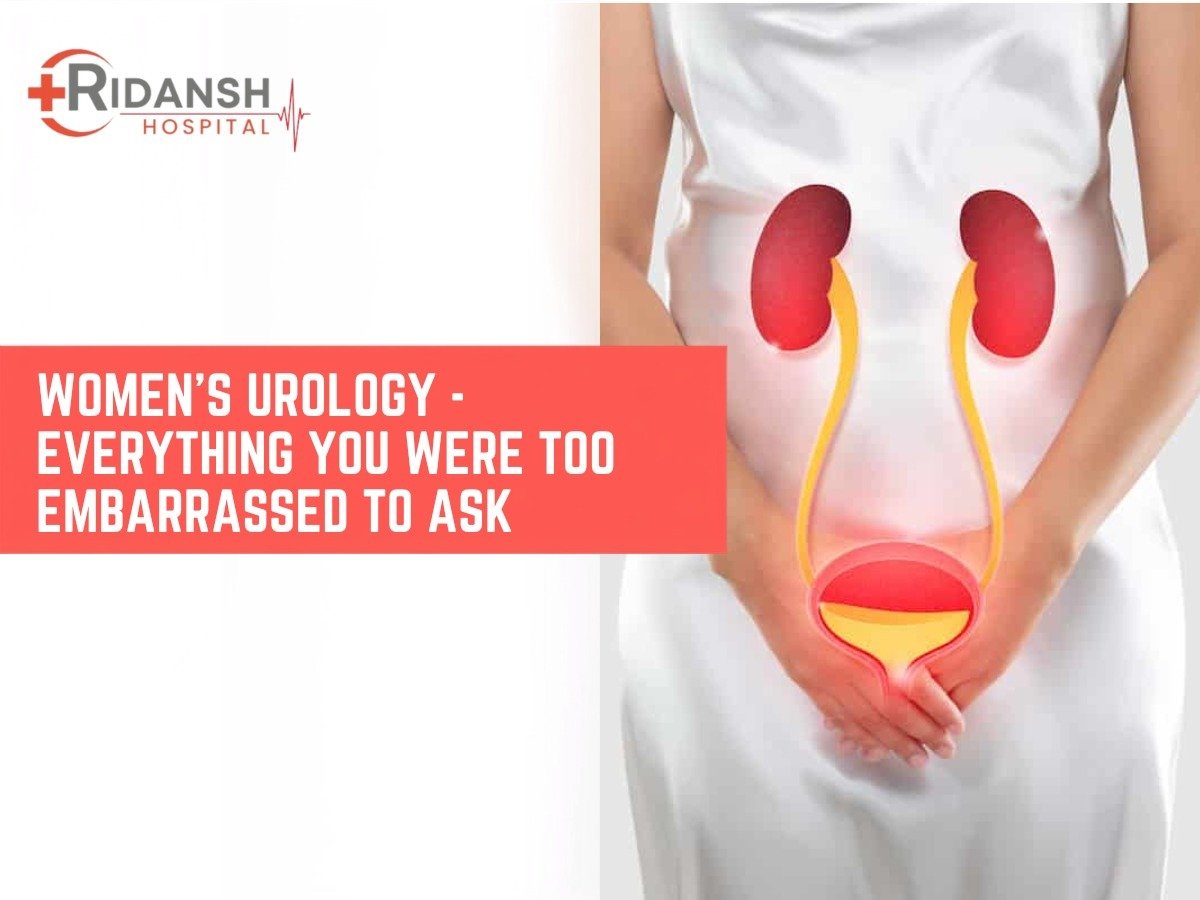
When we hear of a urologist, some individuals consider him or her to be a doctor of men. Nevertheless, urology is equally crucial to women. The female reproductive system is a complicated system that consists of the kidneys, the bladder and the urethral canal. Women tend to have special health issues due to childbirth and hormonal fluctuations, as well as their anatomy.
In Lucknow, we find Ridansh Hospital, where numerous women have been living silently over the years. They are humiliated to discuss leaking or bathroom issues, even with their doctors. We would like to break that silence. Here we give the answers to the questions you may be too timid to ask, in simple language you can comprehend.
1. Is it natural to sneeze and/or laugh a lot?
This is among the most frequent questions that we hear. Most women believe that it is normal to leak urine (called Incontinence) as they grow older or as a reward for having babies.
The fact is: It is not out of the ordinary, but it is ordinary. When you sneeze, laugh, cough, jump or sneeze and leak, the muscles of your pelvic floor have likely become so weak. This is referred to as Stress Incontinence. The positive thing is that you do not need to wear pads for your entire life. The treatments can be as easy as doing some pelvic exercises (Kegels) to some minor, yet highly effective, procedures that can potentially permanently resolve the issue.
2. What is the reason that I have to make urgent visits to the bathroom at night?
Have you suddenly felt the urge to go to the bathroom that you can not control? Or do you get up four or five times a night to urinate? This is commonly referred to as an overactive bladder.
In other women, the bladder will give full signals to the brain when it is not full. This may be due to some foods (such as spicy masala or caffeine), some drugs or underlying medical conditions such as diabetes. In Ridansh Hospital, we assist in finding the cause and bladder training or simple medications are used to enable you to regain control and be able to sleep during the night.
3. What is the reason I continue to get Urinary Tract Infections (UTIs)?
The majority of women will experience at least one UTI in their lifetime, although some find it difficult to cope with them every couple of months. UTIs occur when bacteria get into the urinary tract. Due to the shorter distance that the female anatomy has to the bladder, bacteria can be easily transmitted.
When you pee it burns, your urine is cloudy, or you experience pain in your lower belly, it’s a UTI. If they continue to recur, then time to visit a urologist. We seek the why – it might be kidney stones or what your body does with bacteria. Consuming lots of water and good hygiene make great beginnings, yet chronic infections require professional treatment.
4. What, that Heavy feeling in my lower part?
Other women experience a feeling of fullness or some sort of a bulge in the vaginal region, almost like something falling out. This may be more uncomfortable following prolonged standing or pulling heavy things.
This frequently is Pelvic Organ Prolapse. It occurs when the muscles which hold your bladder or uterus together become fatigued or strained. It usually occurs some years following childbirth or during menopause. Although this sounds frightening, non-surgical and surgical procedures to elevate and stabilise these organs to leave you comfortable and active once more are numerous.
5. Does blood in the urine always translate into a huge emergency?
The presence of blood in your urine (Hematuria) can be very scary. It is also occasionally bright red, or sometimes resembling tea or cola.
Though it is not necessarily a life-threatening emergency, it is not something that can be overlooked. A simple infection, a kidney stone, or even something more significant, such as a growth of the bladder, can cause blood. In Ridansh Hospital, we employ quick tests and ultrasounds to locate the source of the bleeding instantly. Early identification of the cause facilitates treatment to a greater degree of success.
6. Does menopause affect my bladder?
Yes, absolutely. Menopause is characterised by a low production of estrogen in the body. This hormone aids in maintaining the lining of the bladder and the tube (urethra) through which you pass urine healthy and flexible.
The tissues become thin and dry when the estrogen levels are low. This may cause increased infections, irritation, as well as the urge to visit the bathroom. Most of the women are not aware that their urological problems with urology are related to menopause. Treatments that will heal these tissues can be offered by our experts in Lucknow, bringing a colossal change in your day-to-day comfort.
7. What can I do to maintain my urinary system?
It is better to prevent than cure. The following are easy habits that will help you maintain a smooth-running system:
- Hydrate: To empty the bladder, drink 8-10 glasses of water per day.
- Hold it: Go to the bathroom when you need to go. Bladder muscles may be weakened due to the inability to hold urine for a long period of time.
- Eat wisely: High levels of caffeine, soda and extremely spicy foods may irritate the bladder lining.
- Pelvic Exercises: Learn to do Kegel exercises. Building up these muscles is insurance for your bladder.
The reason why I would choose Ridansh Hospital in Lucknow?
We know that it could be personal and challenging to discuss these issues. In Ridansh Hospital, we offer a supportive, safe, and private space for women. Our Urology unit has the most up-to-date equipment that could be used to diagnose issues in the shortest possible time and painlessly.
Not just medicine, but listening, our doctors are experts too. We make time to discuss with you in plain English (or Hindi) how you are doing so that you feel that you are in control of your health. It may be a simple infection or a complicated matter, but we are here to assist you in getting back to your life, without embarrassment.
Citizen Action: Take Your Life Back
Your urinary health is an important constituent of well-being. Constant bathroom visits, leaking or pain are not something you need to just live with. There are easy, non-complicated solutions in modern medicine to most of the urological issues that affect women.