
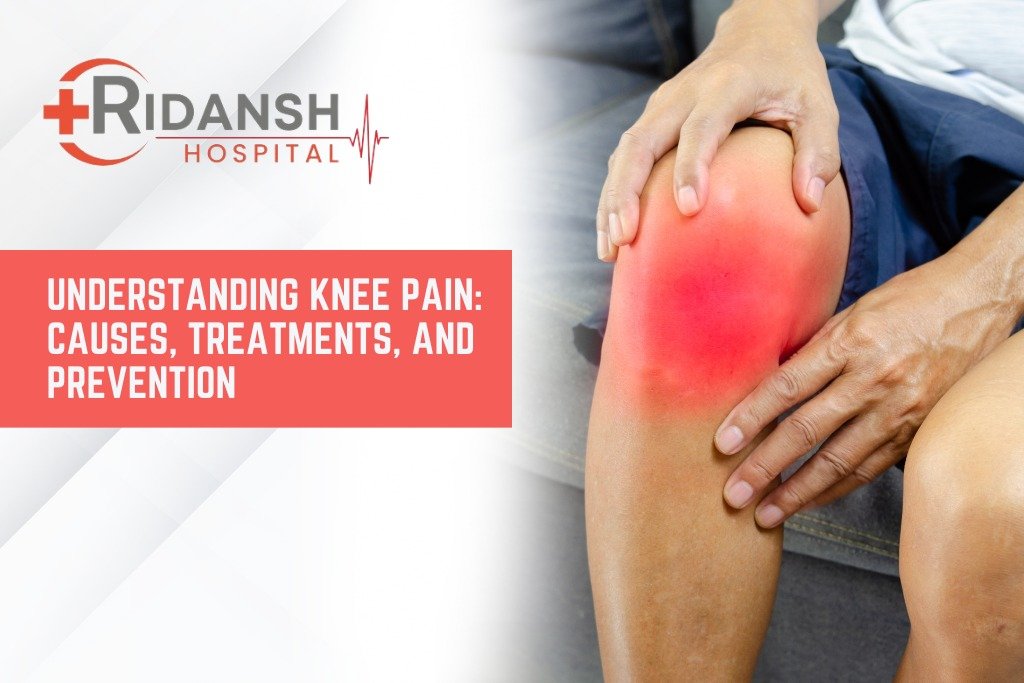
Knee pain has become one of those problems people simply “live with” nowadays. Many patients at Ridansh Hospital tell us the same thing: “It used to hurt a little… then slowly it became part of my daily life.”
Sometimes the pain starts after a minor injury. Other times, it builds up over years of climbing stairs, long sitting hours, weight gain, or just age catching up.
In today’s busy lifestyle, where many of us either sit for long hours or walk on uneven surfaces, it’s not surprising how common knee issues have become by our 30s and 40s—much earlier than previous generations.
What Do We Mean When We Say “Knee Pain”?
Knee pain isn’t one single condition. It’s more like a signal that something inside the joint isn’t working the way it should.
The knee is made of:
- bones
- ligaments
- cartilage
- tendons
- muscles
Think of it like a small machine—if even one part stops cooperating, everything feels off.
Some people feel a sharp stab when they bend, others experience stiffness in the morning, and a few experience a “catching” feeling where the knee doesn’t move smoothly.
Why Knee Pain Happens (Most Common Reasons)
After seeing thousands of patients with knee problems, these are the issues that come up the most:
1. Osteoarthritis (Wear-and-Tear Pain)
This is one of the top causes in people above 45–50. The cushion inside the knee slowly wears down. People usually describe it as a deep, dull ache—worse in winter or after sitting too long.
2. Sudden Twists and Ligament Injuries
ACL or MCL injuries mostly happen while playing sports—or honestly, even from stepping off a curb wrong. Many people say, “I heard a pop,” and then the swelling starts.
3. Meniscus Tear
This is the cushioning pad that helps the knee move smoothly. A tear often happens during twisting or squatting. Patients often complain the knee feels like it “locks” or “gets stuck.”
4. Tendonitis
Seen a lot in people who do repetitive activities—running, weight training, or climbing stairs frequently.
5. Extra Weight
Even 5–7 extra kilos put significant pressure on the joints. Over time, the cartilage simply wears down faster.
6. Age and Weak Muscles
As we grow older, the support around the knee—especially the thigh muscles—weakens, making the joint more vulnerable.
Symptoms You Should Not Ignore
Some knee discomfort improves with rest. But if you notice any of these, it’s better to get checked:
- Swelling that stays for days
- Knee suddenly “giving way”
- Clicking or popping with pain
- Difficulty bending or straightening
- Pain that wakes you at night
- Warmth, redness, or fever (infection risk)
Ignoring these signs often makes the condition harder to treat.
How Orthopedic Doctors Diagnose Knee Pain at Ridansh Hospital
One of the reasons people trust Ridansh Hospital—a well-known orthopedic hospital in Lucknow—is the thorough approach to evaluation. Most patients appreciate that the doctor doesn’t just glance at the knee and prescribe painkillers.
1. Physical Examination
The way you walk, stand, bend, sit, or shift weight gives a lot of clues. Doctors gently press specific areas to identify the exact source of pain.
2. Imaging
- X-rays help check the bones and arthritis level
- MRI scans show ligament, cartilage, or meniscus problems
- Ultrasound helps view soft tissues
3. Blood Tests
Used only when necessary, especially if infection or rheumatoid arthritis is suspected.
Good diagnosis saves patients from unnecessary treatments.
Treatment: What Actually Helps
There’s no one-size-fits-all treatment. It depends on age, activity level, weight, and what’s happening inside the knee.
1. Non-Surgical Options (Most Patients Start Here)
Rest and Ice
Still very effective for fresh injuries.
Pain and Anti-Inflammatory Medicines
Used for short-term relief.
Physiotherapy
This is usually the real solution. When thigh and hip muscles get stronger, pressure on the knee drops drastically.
Many patients say things like, “I didn’t realize weak muscles were causing half my pain.”
Lifestyle Changes
Small but effective:
- Switch to low-impact workouts
- Don’t sit cross-legged for long periods
- Use proper shoes
- Lose a little weight (even 3–4 kg helps)
2. Minimally Invasive Procedures
Arthroscopy
Done through tiny cuts. Useful for meniscus tears, cartilage smoothing, and certain ligament issues. Shorter recovery time compared to traditional surgery.
Injections
- Steroid injections control inflammation
- PRP (Platelet-Rich Plasma) promotes tissue repair
Doctors recommend them only when they fit the patient’s specific condition.
3. Surgical Treatments
Surgery is the last option, but sometimes it is the best one—especially when the knee is too damaged.
ACL Reconstruction
Restores stability for active individuals.
Meniscus Repair
Helps preserve natural knee function.
Knee Replacement
Partial or full replacement is recommended when arthritis is severe.
Patients looking for knee surgery in Lucknow often visit Ridansh Hospital because of its modern orthopedic setup and recovery-focused care.
How to Prevent Knee Pain (Simple, Honest Tips)
You don’t need a gym membership to protect your knees. Here’s what helps:
- Strengthen thigh and hip muscles
- Walk on even surfaces when possible
- Avoid squatting deeply
- Warm up before any sports activity
- Use supportive footwear
- Keep weight in a healthy range
- Do low-impact exercises like walking, cycling, or swimming
Most people see improvement within a few weeks if they follow these consistently.
Why People Trust Ridansh Hospital for Orthopedic Care
Over the years, Ridansh Hospital has become a preferred choice for knee and joint problems in Lucknow. Patients usually mention:
- Doctors who genuinely listen
- Clear explanations (not medical jargon)
- Step-by-step diagnosis
- On-site physiotherapy
- Modern imaging and surgery facilities
- A practical, realistic approach—not aggressive treatment
Most importantly, treatment plans are customized based on age, work type, activity, and lifestyle.
Real Patient Experiences
Many patients walk in saying, “I thought this pain was normal for my age.”
But after a proper work-up and 2–3 weeks of guided physiotherapy, the results often surprise them.
Others with ligament or meniscus tears recover quite well after minimally invasive surgery and rehab.
The most common thing patients say is, “I wish I’d come earlier.”
Conclusion
Knee pain may start small, but it can seriously affect daily life if left untreated. Early diagnosis makes recovery easier and prevents long-term joint damage.
If knee pain is slowing you down, consider getting evaluated by an orthopedic specialist.
You can book a consultation at Ridansh Hospital, Lucknow to understand what’s causing the pain and what treatment options would work best for you.